Join NOW for the
2013 Sailing Season
NO EXPERIENCE
OR
BOAT
NECESSARY
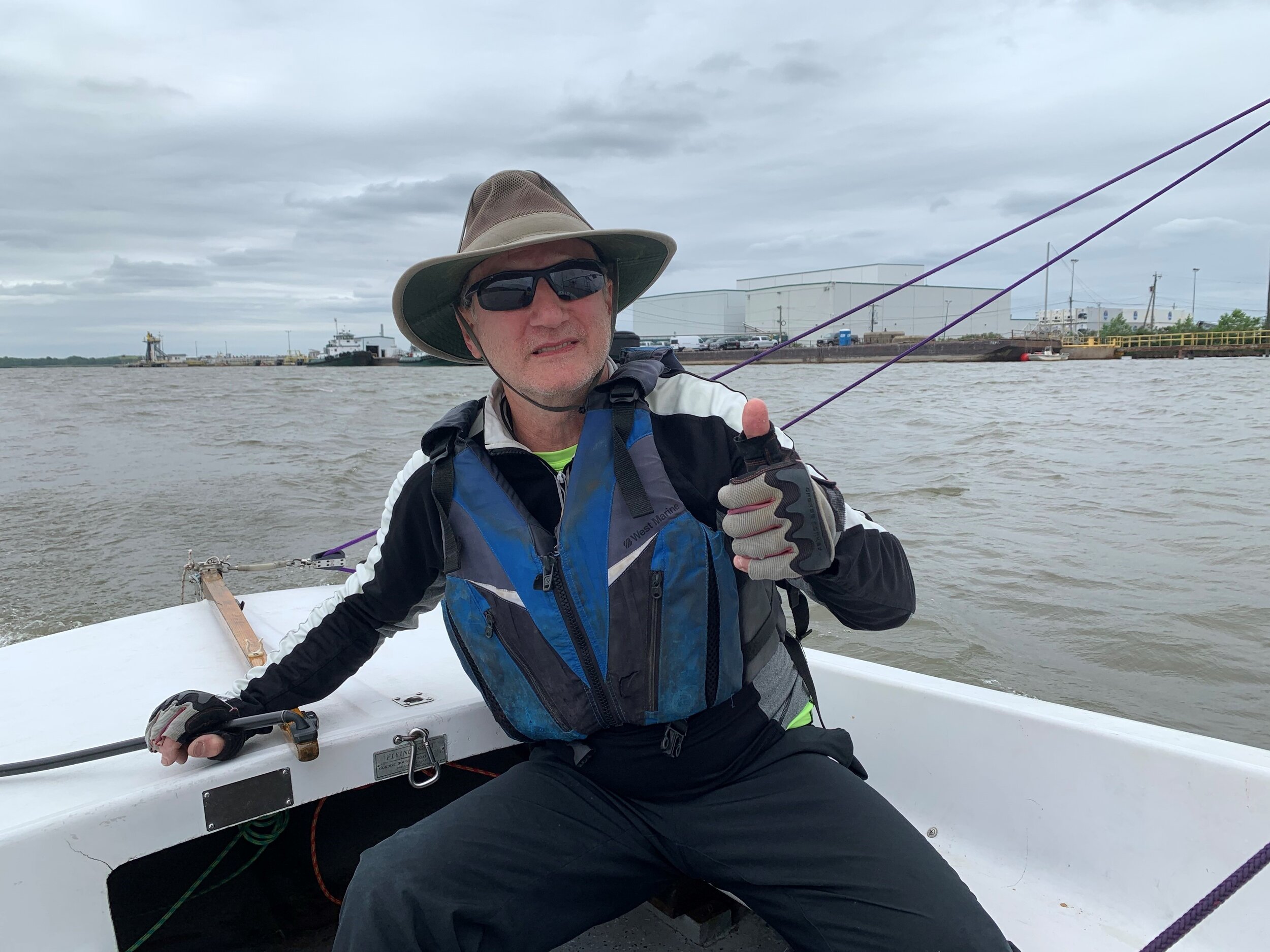
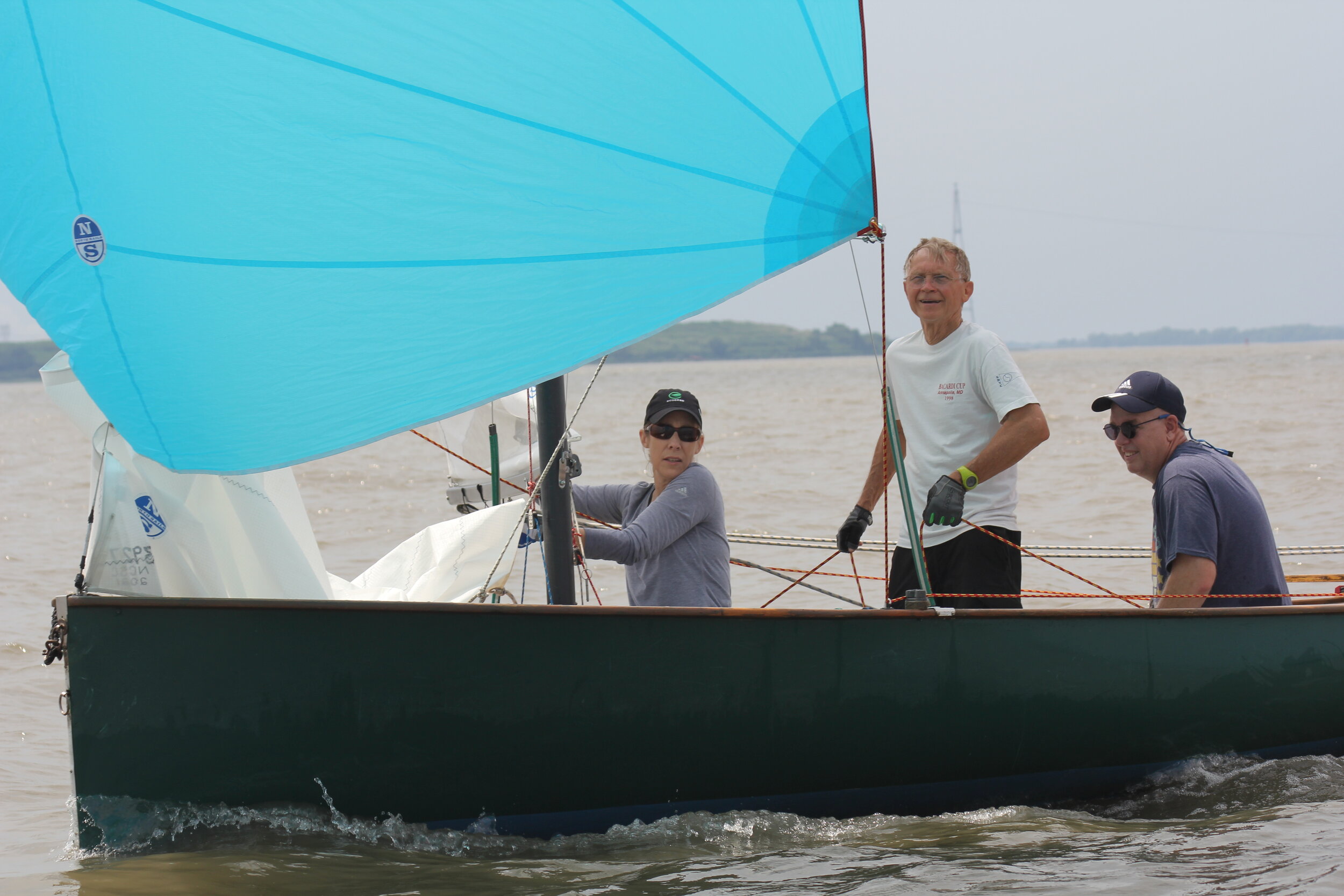
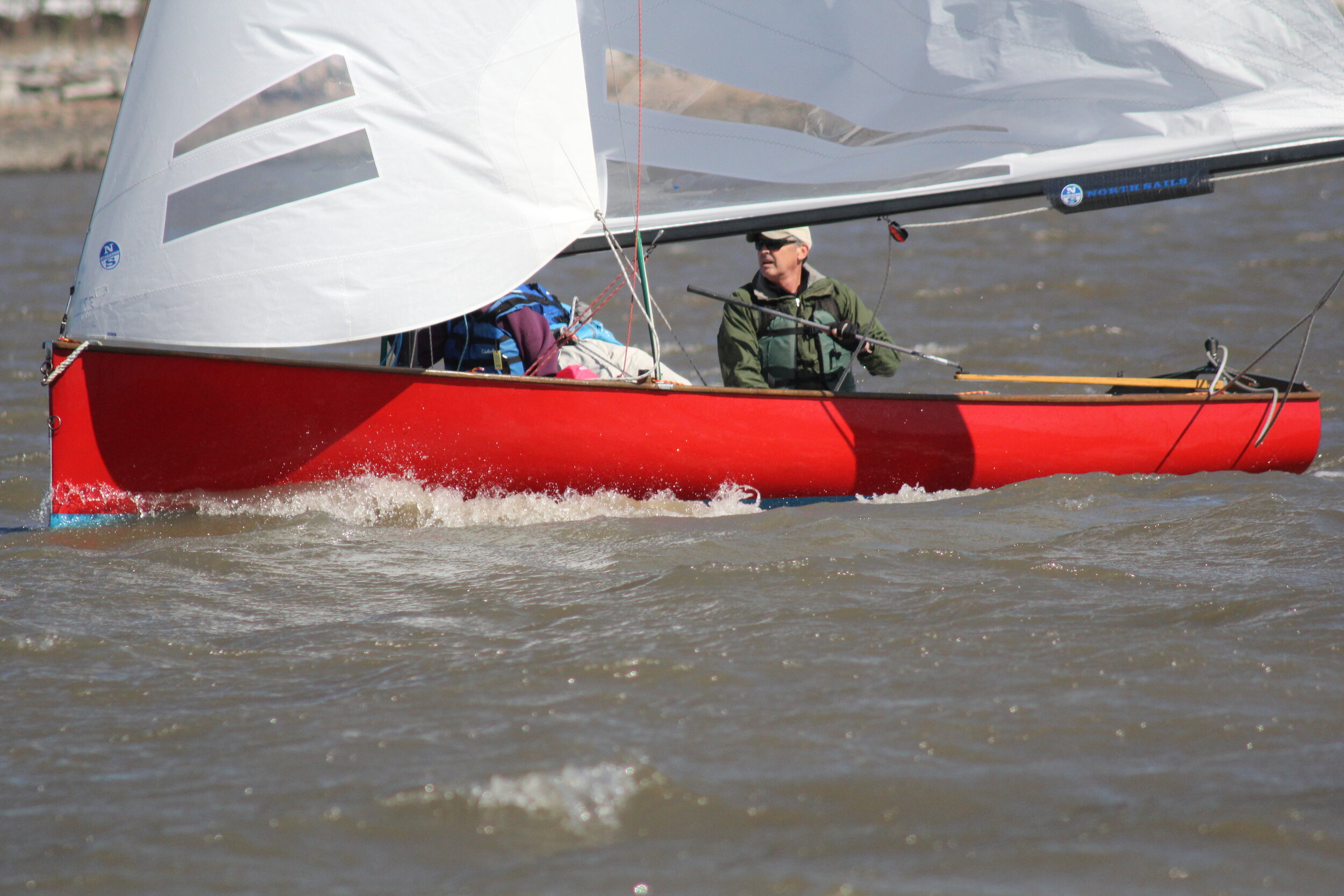
New Castle Sailing Club has a limited number of openings for the 2013 sailing season and is currently accepting applications for membership. The club owns a fleet of Thistle, Flying Scot, and Hunter sailboats that are moored in the Delaware River off the New Castle Delaware waterfront and available to all members on a first-come first-serve basis.
Classroom instruction for new members begins in February and continues through April, and on-the-water instruction is offered throughout the sailing season, which runs from early May through October of each year.
Annual Dues are just $300 for the whole family. There is a one-time initiation fee of $500 that can be paid in in two annaul installments. For more information about the club see our brochure, call 302-328-1570 and leave a message, or contact the Membership Director. To apply for membership, fill out an Application and email it to the Membership Director or mail it to New Castle Sailing Club, P.O. Box 46, New Castle, DE 19720. Invitations to join will be sent in the order applications are received until all available slots are filled.
For experienced sailors and interested novices alike, the club is by far the most fun, affordable, and convenient way to enjoy sailing in the Wilmington area. Sign up now. Classes begin in early February.
On-the-Water Training
On-the Water Classes begin in May and meet at 1pm on Sat. and Sun. afternoons and launch at 1:30. Everyone returns between 4 and 5pm.
Thistle Racing
Racing on the Thistles are held every Sat. morning. Arrive by 8:30am. Launch at 9. All new members are welcome. There's no faster way to learn to sail than racing nor exciting.
THE BITTER END
Ever wonder where all those words and phases come from and what they mean? Here are some for your reading pleasure.
Port and Starboard

Port and starboard are shipboard terms for left and right, respectively. Confusing those two could cause a ship wreck.
In Old England, the starboard was the steering paddle or rudder, and ships were always steered from the right side on the back of the vessel. Larboard referred to the left side, the side on which the ship was loaded. So how did larboard become port? Shouted over the noise of the wind and the waves, larboard and starboard sounded too much alike. The word port means the opening in the "left" side of the ship from which cargo was unloaded. Sailors eventually started using the term to refer to that side of the ship. Use of the term "port" was officially adopted by the U.S. Navy by General Order, 18 February 1846. |
|
About Us
This unique organization was founded in 1953 by a small group of New Castle residents, who together bought the club's first boat, a used Thistle. Today the fleet includes eight 17-foot Thistles, three 19-foot Flying Scots, a new 21-foot Hunter, a runabout, and twelve dinghies. The club leases property at the lower end of Battery Park in New Castle from the New Castle Commons Trustees. There they have built a sail and dinghy house and moor their fleet. A few blocks away, the club owns a barn, where the boats are stored and overhauled during the winter, and a clubhouse for meetings and socializing. Continue...
BITTER END CONT. -
As the Crow Flies
When lost or unsure of their position in coastal waters, ships would release a caged crow. The crow would fly straight towards the nearest land thus giving the vessel some sort of a navigational fix. The tallest lookout platform on a ship came to be known as the crow's nest.
Between the Devil and the Deep Blue Sea
The devil seam was the curved seam in the deck planking closest to the side of the ship and next to the scupper gutters. If a sailor slipped on the deck, he could find himself between the devil and the deep blue sea.
The Devil to Pay
To pay the deck seams meant to seal them with tar. The devil seam was the most difficult to pay because it was curved and intersected with the straight deck planking. Some sources define the "devil" as the below-the-waterline-seam between the keel and the adjoining planking. Paying the Devil was considered to be a most difficult and unpleasant task.
LOCAL NAVAL HISTORY
John Paul Jones
Jones sailed from the Delaware River in February 1776 aboard Alfred on the Continental Navy's maiden cruise. It was aboard this vessel that Jones took the honor of hoisting the first U.S. ensign over a naval vessel the Grand Union Flag.
After a long eventful career in America and Russia Jones died on July 18, 1792 in Paris. Jones' body was returned to America. On April 24, 1906, Jones's coffin was installed in Bancroft Hall at the United States Naval Academy, Annapolis, Maryland, following a ceremony presided over by President Theodore Roosevelt.

|